中文 |


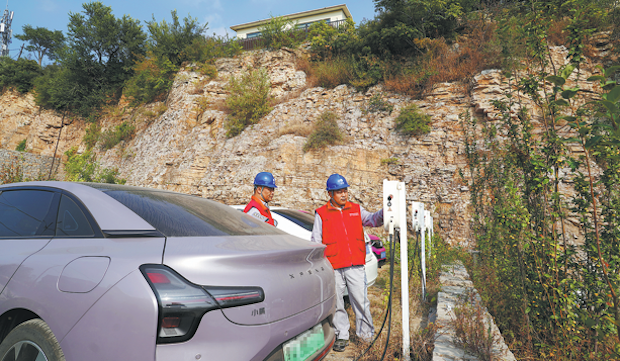
Electricians examine charging piles at a parking lot in the village. ZHENG LANXIN/FOR CHINA DAILY
When the local quarry closed in 2004, villagers turned to rural tourism, converting heritage stone homes into guesthouses. But the village's antique infrastructure was ill-equipped for modern hospitality.
Just over a decade ago, the village ran on only two small transformers. Peak-hour power cuts were routine during holidays, when guesthouses ran air conditioners, water heaters and kitchen appliances at full capacity. Voltage fluctuations also disrupted refrigeration and baking equipment for local food businesses.
"I spent a fortune fitting every room with air conditioning, but the grid simply couldn't handle it," recalled Zhou Yunlong, a local homestay operator. "When all units switched on at once, the circuits would trip. Power cuts were so frequent that guests would complain and even cancel bookings. I had no choice but to limit how many guests I could take."
Winter presented another challenge. Traditional coal-fired kang — heated brick bed platforms — stained the historical stone walls with soot, created fire hazards in narrow lanes, and left businesses unable to operate during colder months.
The dilemma Xijingyu faced is common across Asia's historical rural communities: how to provide modern urban amenities without destroying the heritage aesthetic that attracts visitors in the first place.

Copyright © Tianjin Municipal People's Government. All rights reserved.

Copyright © Tianjin Municipal People's Government. All rights reserved.