
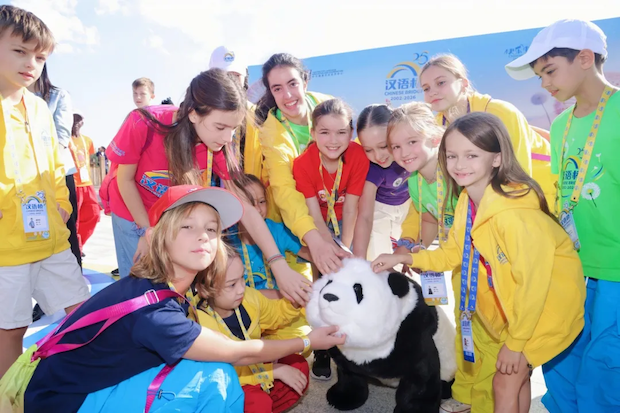

Ten-year-old Raziya Abulati from Qira county, Hotan, Xinjiang Uygur autonomous region, burst into tears the moment she spotted Jiang Zhiyao, her former volunteer art teacher, at Minyuan Square in Tianjin.
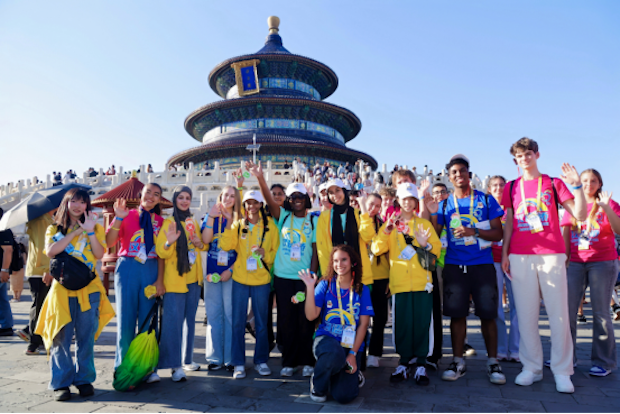
A group of 19 Chinese-language learners from the University of Lisbon, Portugal, recently visited Tianjin as part of the Chinese Bridge summer camp, where they put their speaking skills to the test among China's ancient culture.
German precision manufacturer Kern-Liebers has expanded its operations in Tianjin operations by opening a second-phase factory, demonstrating its strong confidence in China's market and its commitment to the city's long-term growth.
More than 300 government, business, and academia representatives from China and abroad gathered in Tianjin this week to discuss how consumption upgrades are reshaping the world's second-largest economy, with many highlighting the country's growing potential to boost domestic demand through a shift toward services and experience-driven spending.
Tianjin's export value of robotic products in the first half reached 1.08 billion yuan ($159 million), marking a year-on-year growth of 487.9 percent, said Tianjin Customs.
When people think of Tianjin, their minds often jump straight to the delicious street food or the stunning foreign-style buildings that line the streets. But the real souvenirs one can tuck into a bag and take home — the ones that carry the city's true spirit — are two of its most famous intangible cultural heritage items: Yangliuqing New Year woodblock prints and Niren Zhang clay figurines.
Tianjin has a long coastline, and its food is a beautiful blend of two worlds: half the flavor comes from the Bohai Sea, and the other half hides in the smoky, bustling breakfast stalls tucked away in the city's alleys. This is the relaxed, passionate soul of the people of Tianjin.